What the PAVA Framework engagement involved, and what AI as a B2B pipeline channel actually looks like.
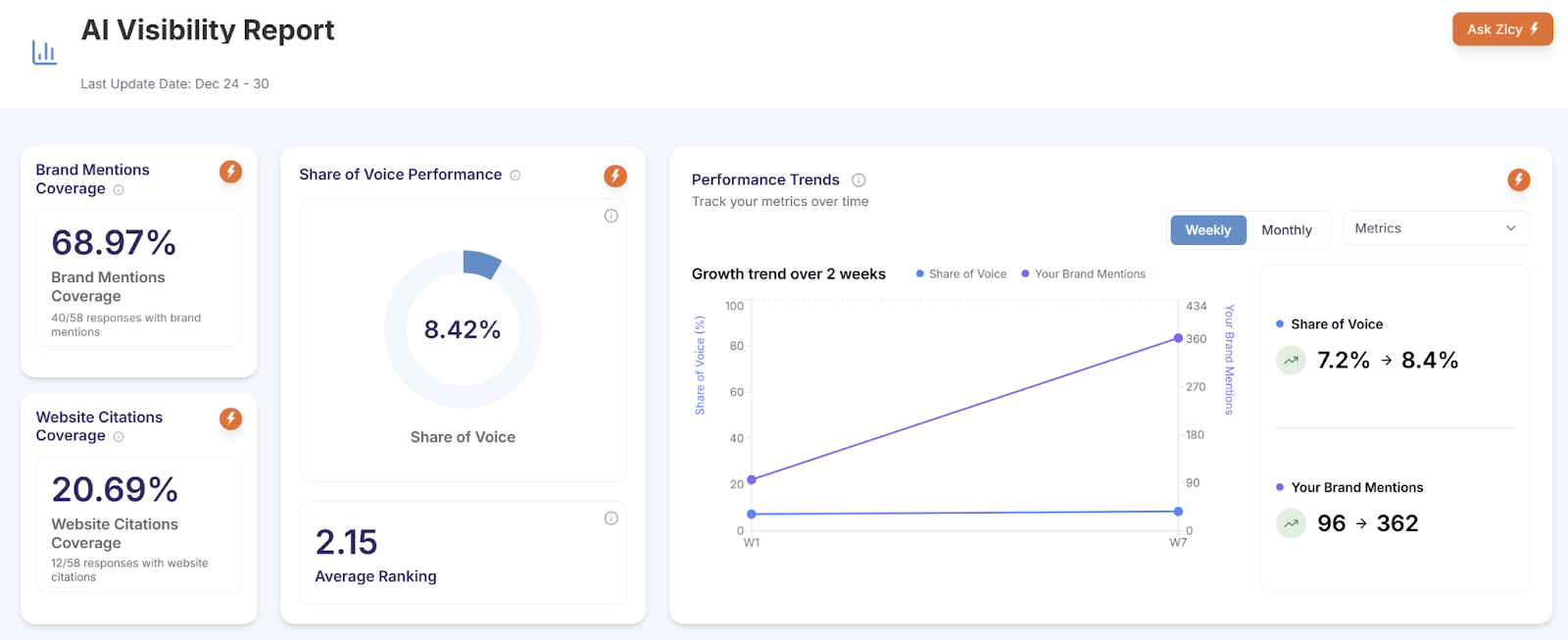
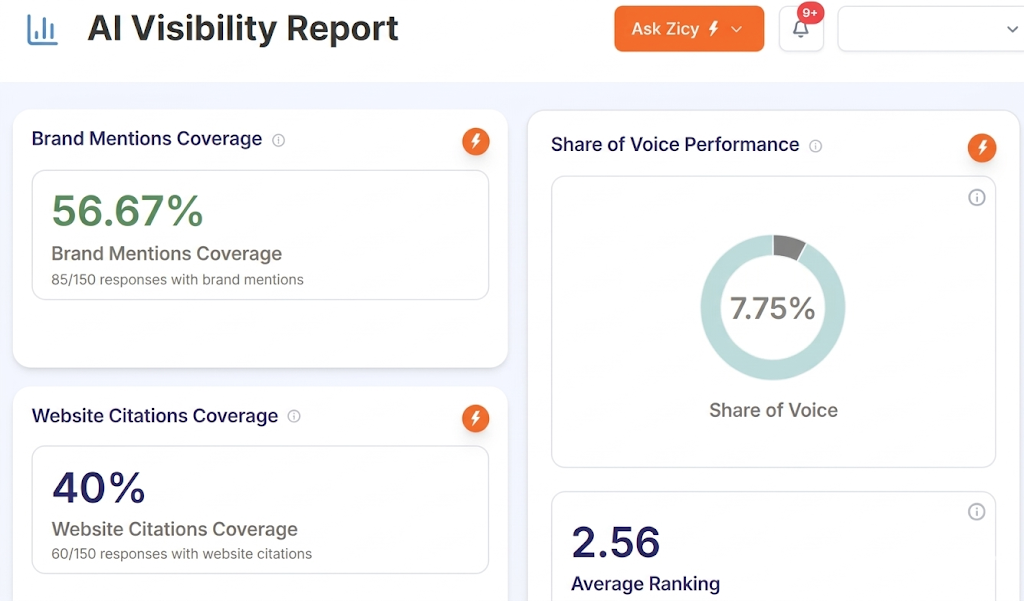
A B2B client came to us last quarter with an active marketing programme that was generating zero attributable pipeline from AI search. Not because AI search wasn’t already shaping their buyers’ shortlists, but because no one in the marketing function was measuring whether the brand was even being mentioned. Ninety days later, the brand was named in 56.67% of tracked category queries, had a 70.45% engagement rate on AI-referred traffic, and 113 commercial events tied to AI sessions.
Below is what the work involved, and what I would take from it.
The Starting Position
In B2B today, the first vendor shortlist usually gets compiled inside an AI platform, not on a search results page. A procurement lead asks for “best providers of [category] for [use case]” and three to five names come back. The brand that appears in those answers gets the meeting. The brands that do not, do not.
That filter was already operating around this client before we engaged. Their existing marketing programme was reporting healthy numbers across the channels they were measuring. The channel doing the early vendor screening was completely unmeasured.
We baselined them across ChatGPT, Gemini, Perplexity, Google AI Overviews, and Google AI Mode. We mapped the high-intent commercial and comparison queries their actual buyers were running. We benchmarked them against the competitors AI was citing in their place.
The baseline was uneven. On some priority queries the brand was already showing up. On most it was not, and competitors with weaker product positioning were being named consistently.
What the Work Involved
1. PRESENCE. Entity integrity.
Before any content work, we worked on what AI could verify about the brand. Definitional authority was strengthened. Service positioning was clarified for unambiguous AI extraction. Category descriptions were tightened to remove the ambiguity that was making AI default to better-defined competitors. Schema deployed across the site. Canonical brand description aligned across LinkedIn, Crunchbase, industry directories. Wikipedia work went through the standard contributor process with paid-contributor disclosure where the policy requires it.
2. AUTHORITY. Earned editorial standing.
We identified which third-party publications AI was actually citing in this category, then briefed the client’s existing PR partner against that target list. Genuine editorial opportunities, pursued on the merits of the work. Citation outcomes measured against each placement.
This is what AI Citation Enablement looks like on the earned side. AICE is the discipline we run across all four PAVA pillars: making the brand’s expertise easier for AI to find, verify, and accurately attribute, on the brand’s own merits.
3. VISIBILITY. Content architecture.
We mapped the prompt universe, our term for the high-intent commercial and decision-stage queries the brand’s buyers actually run. Then we did gap analysis: which queries lacked visibility, which had partial coverage, which were already strong.
Owned content was restructured into the formats AI retrieval systems extract most reliably: direct answers at the top of a section, comparison tables for evaluation-stage queries, named methodology frameworks, and statistics sourced with publisher, sample, and year. Citation eligibility was raised page-by-page. The balance between owned authority signals and third-party validation was tuned deliberately.
That filter was already operating around this client before we engaged. Their existing marketing programme was reporting healthy numbers across the channels they were measuring. The channel doing the early vendor screening was completely unmeasured.
We baselined them across ChatGPT, Gemini, Perplexity, Google AI Overviews, and Google AI Mode. We mapped the high-intent commercial and comparison queries their actual buyers were running. We benchmarked them against the competitors AI was citing in their place.
The baseline was uneven. On some priority queries the brand was already showing up. On most it was not, and competitors with weaker product positioning were being named consistently.

4. AMPLIFICATION. Sustained presence.
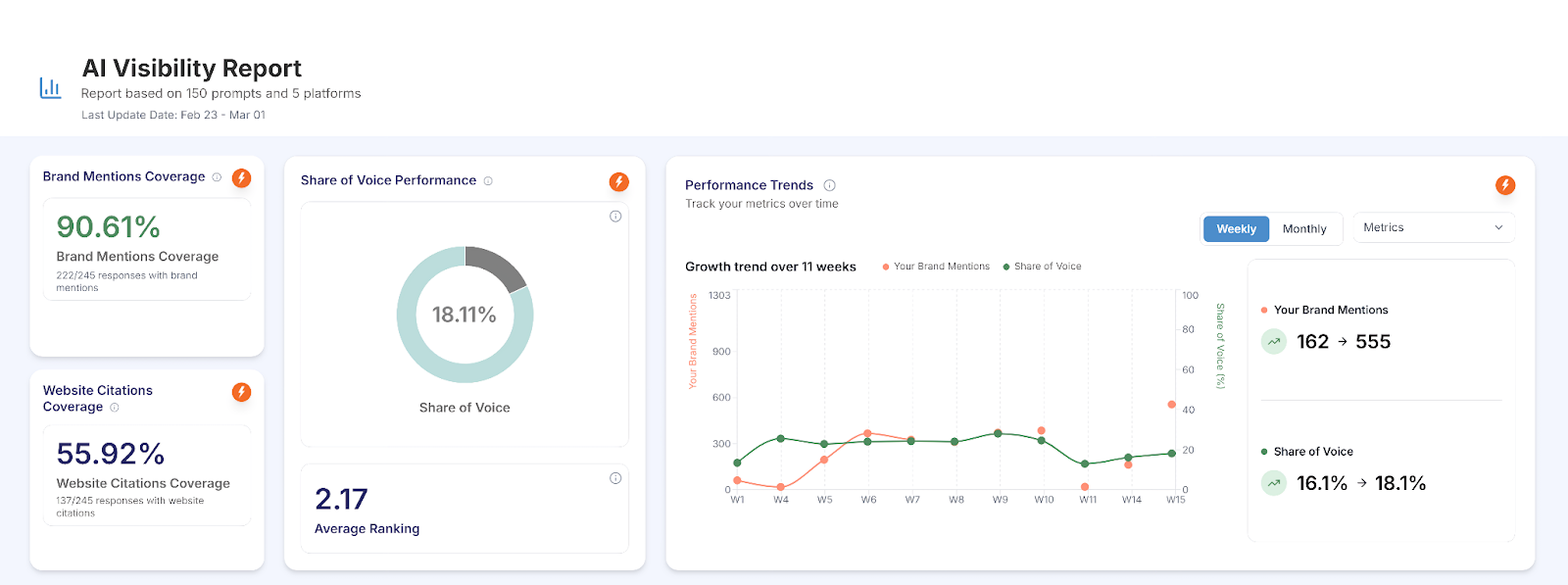
Continuous monitoring across all five named AI platforms. Competitor density per prompt was tracked weekly. Where competitor presence was rising in a query cluster, reinforcement work was scheduled. Sentiment patterns across cited sources were watched. AI traffic was attributed all the way through to CTA clicks and key events, so AI visibility outcomes could be measured against pipeline activity, not just mention volume.
The Numbers
AI Visibility Metrics:
- Brand mention coverage: 56.67%
- Citation rate: 40%
- Share of voice: 7.75%
- Average AI ranking position: 2.56 (consistently inside the top 3)
- Priority query coverage: 5/5 on tracked high-intent prompts
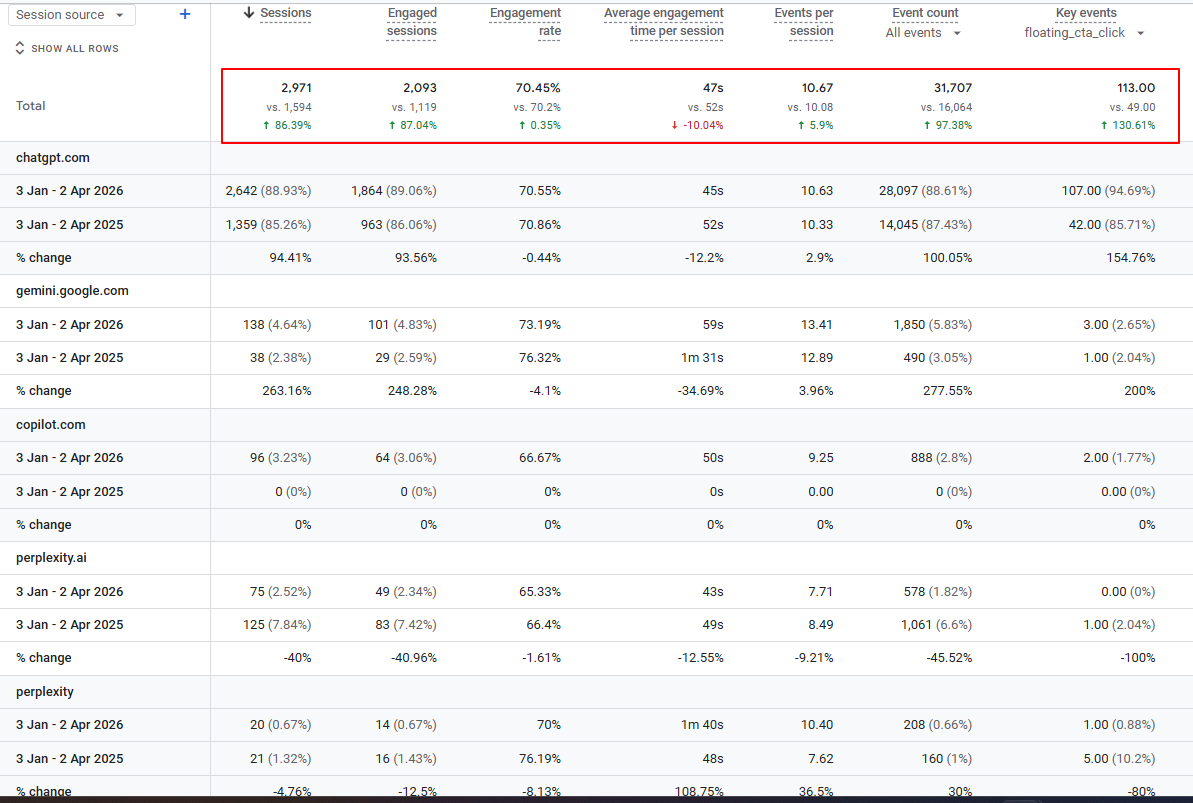
AI-Driven Traffic (3 Jan – 2 Apr 2026, vs prior period):
- AI sessions: 2,971
- Engaged sessions: 2,093
- Engagement rate: 70.45%
- Total events: 31,707
- Key events (CTA clicks / conversions): 113
Platform Traffic Breakdown:
- ChatGPT: 2,642 sessions (88.9%)
- Gemini: +263% growth YoY
We measure outcomes against what we call the M-C-R stack: Mention, Citation, Recommendation. This engagement moved the first two materially and held an average ranking position of 2.56, which is meaningful proximity to the Recommendation tier. Recommendation rate is the third tier, the suggested-choice number, and the next horizon for the measurement programme.
The number worth highlighting to a board is the 113 key events. AI search did not just produce traffic. It produced commercial actions. A 70.45% engagement rate on the AI-referred sessions is the leading indicator. The traffic arriving from AI platforms had already done the vendor screening inside the chat window. They landed on the site past evaluation and acted accordingly.
Three Observations
AI Search Is a B2B Pipeline Channel, Not a Branding Layer
The most common misframe I encounter from B2B CMOs is that AI visibility belongs in the brand-awareness column of the marketing dashboard. It does not. AI search is increasingly where the first vendor shortlist is compiled. The 113 key events on this engagement are pipeline-driving actions. Branding metrics that do not attribute through to commercial events undersell what is actually happening.
ChatGPT Is Doing Most of the Work, but the Other Platforms Matter More Than Volume Suggests.
The Gap Analysis Is the Easiest Quarter of Growth in Most B2B Programmes.
Most B2B brands already have decent presence on some priority queries and complete absence from others. Closing the absence gaps was the single highest-leverage work on this engagement. Brand Leaders maintain themselves. Battlegrounds need defensive work. Blind Spots are pure addressable upside.
What Was Not in Scope
- No paid placements with passing links. Any sponsored editorial carried rel=”sponsored” or rel=”nofollow”.
- No syndicated press release distribution with optimised anchor text.
- No anonymous Wikipedia editing on the brand’s behalf.
- No AI-generated content published at scale.
- No incentivised or coordinated reviews on platforms AI reads.
These are not stylistic preferences. They are the line between sustainable AI visibility work and tactics that are about to be audited out of the market.
In May we renamed our signature practice from “AI Citation Engineering” to “AI Citation Enablement”. The acronym (AICE) stayed, the framing changed. “Engineering” implies working on AI’s evaluation. “Enablement” describes working on the brand. The second framing is the only one I am comfortable defending in client engagements over the next two years.
Where to Start
If your brand is in a B2B category and AI search is not currently a measured channel in your marketing dashboard, that is the place to start. We run a complimentary AI Visibility Audit. It takes a week and produces a board-ready benchmark against your top three competitors across all five major AI platforms, with attribution down to commercial events where the analytics support it. The audit is the diagnostic phase of the AI Visibility Operating System we build for enterprise CMOs.